/prod01/channel_54/media/fit-website/site-assets/images/FT-Horiz_crimson-gold.png)
/prod01/channel_54/media/header-images/quantum-bio-header.jpg)
Human Health, Injury, and Regeneration Research
Funding
- FL DOE AeroSpace Cybersecurity Engineering Development (ASCEND), 2024-25
- FL DOE Biomedical Aerospace Manufacturing (BAM), 2022-23
- NIH Grant R01HL143484: Computer Assisted Coronary Artery Stent Interventions (2018-23)
- NSF Gants: CAREER (2013-19), GARDE (2012-17), BRIGE (2009-11), REU sites etc.
- UNMC Pilot Grants: Optic Nerve Head Biomechanical Modeling (2015-17), Modeling ureteral reimplant surgery for better clinical outcomes (2016), Develop Human Neural Progenitor-Based In Vitro Models for Mild Traumatic Brain Injury (2018), Development of Individual Specific Finite Element Model of the Optic Nerve Head for Non-Invasive Intracranial Pressure Measurement (2018-19), Computational Modeling of Retinal Damage (2020-21).
- Edgerton Innovation Award, UNL College of Engineering (2013)
- US Army Research Office (ARO): Trauma Mechanics (2009-2012)
- NASA Nebraska Space Grant: Fracture Characterization of Adhesively Bonded Composite Joint (2009-2012)
- SD Board of Regents Competitive Research Grant: The Correlation between Arterial Strain and Coronary Restenosis (2008-2009)
Patents
- U.S. Patent No. 12,609,207, Issued 2026, Prediction of Stent Expansion for Treatments. David L Wilson, Yazan Gharaibeh, Juhwan Lee, Sadeer Al-Kindi, Vladislav N Zimin, Linxia Gu, Pengfei Dong, and Hiram Bezerra.
- U.S. Patent Application 18/332,950, Publication of US20240169524A1, May 2024. Prediction of Stent Expansion using Finite Element Modeling and Machine Learning. David L Wilson, Yazan Gharaibeh, Juhwan Lee, Linxia Gu, Pengfei Dong, Sadeer Al-Kindi, and Hiram Bezerra.
Digital Twin for Stent Planning: Post-PCI Morphology and Stress Prediction from IVOCT
This study developed a rapid and reliable alternative to conventional FEM modeling for PCI planning, supporting its integration into routine clinical workflows. DOI: 10.1016/j.compbiomed.2025.111216
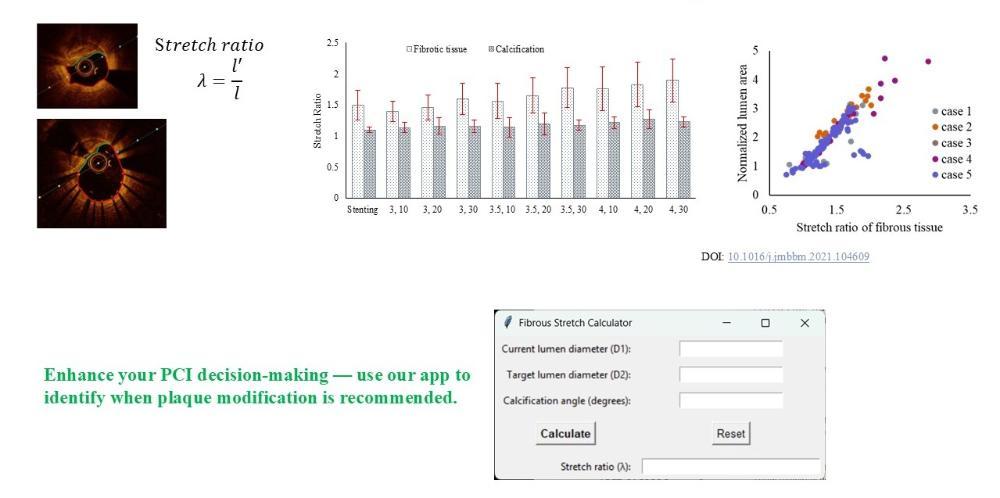
Fibrotic tissue stretch as an index for lumen gain
To develop in silico experiments and physical measurements for elucidating issues in stent deployment in highly calcified lesions and establishing guidelines for treatment
To apply machine learning methods for quantifying calcification
Enhance your PCI decision-making—use our app to identify when plaque modification is recommended.
https://doi.org/10.1016/j.jmbbm.2021.104609
Stent Mechanotransduction: role of solid mechanics & hemodynamics
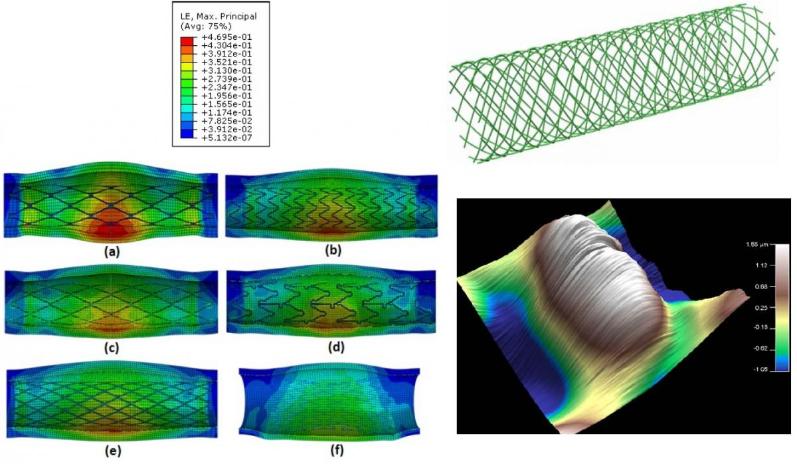
To understand the mechanism of in-stent restenosis from multiple scales (cell, tissue, organ) and multiphysics ( blood-artery interactions).
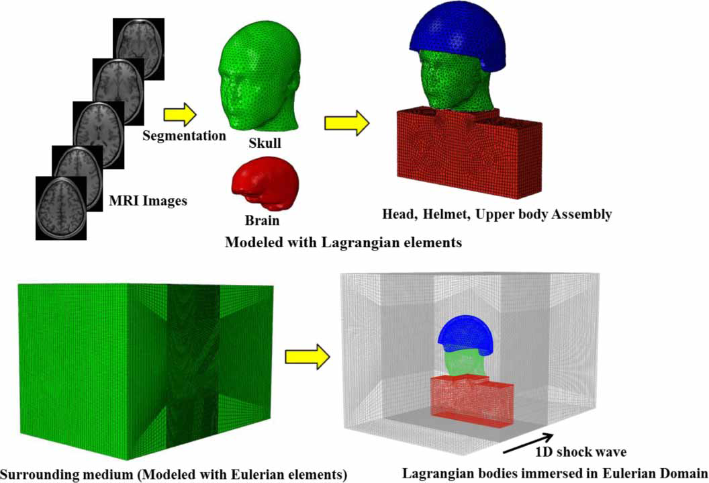
Traumatic injury due to Blast or Impact
To characterize the blast or impact induced brain damage and optic nerve damage
To develop mechanical measures using integrated experimental and computational approaches.
To identify the role of protective gears
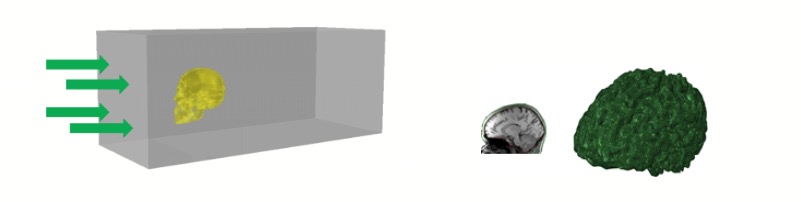
Image assisted analysis
To transform 2D images data, such as CT , MRI or microscopy, to 3D solid model with the utmost accuracy and flexibility, and perform a variety of design and analysis on the 3D model.
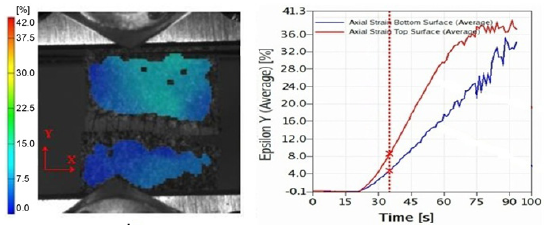
Multiscle Material Chracterization
To characterize the mechanical properties of the native & engineered tissue including cells and fibers, and identify the threshold of tissue/cell injuries
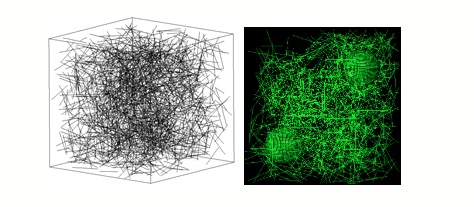
Quantification of fiber networks
To optimize the microenvironment of cells and design future clinical relevant biomaterials.
Nanocomposites
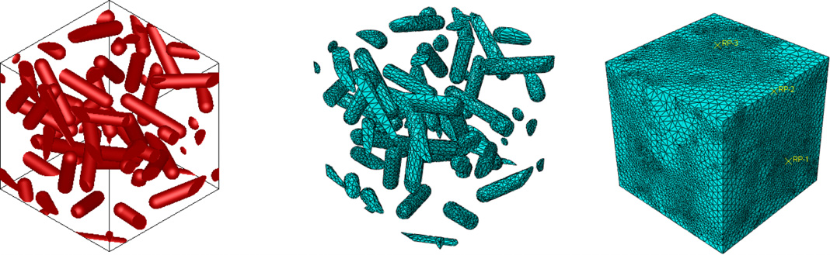
To design and optimize the composition of nanocomposite for a targeted performance/function.